Call of the Wild With Andrea Ferolla
Belmond is not only custodian to some of the most historic properties in hospitality, but is also adjacent to many of the world’s pristine natural wonders. From rockpools to waterfalls, cenotes to lagoons, here we take a tour of the natural bounty that surrounds our properties – seen through the paintbrush of Andrea Ferolla.
1 / 6
Iguassu Falls
Hotel das Cataratas
A thunderous spectacle straddling the border of Brazil’s Paraná state and Argentina’s Misiones province, the Iguassu Falls form the largest waterfall system in the world. In the Tupí-Guaraní language, the name comes from ‘y’ (pronounced ‘ee’), meaning water, and ‘'ûasú’, meaning big or great. Local legend speaks of a deity spurned when a beautiful woman, Naipí, fled with her mortal lover, Tarobá, in a canoe; enraged, the deity is said to have split the river, creating the mighty falls and casting the couple into eternal descent.
VISIT IGUASSU FALLS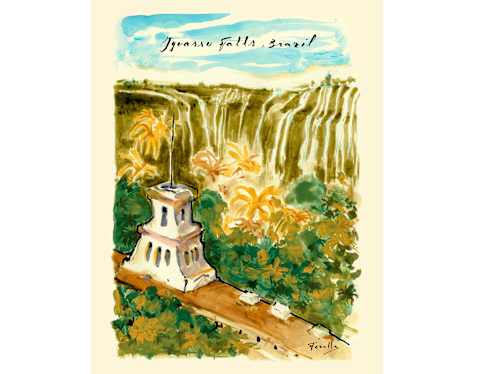
2 / 6
Lake Titicaca
Visited by the Andean Explorer
At 3,812m, Peru and Bolivia’s Lake Titicaca is the highest navigable lake on Earth. Here, still blue waters reflect the white tipped peaks that encircle it and house more than 530 aquatic species. Life thrives both below and above its surface with the Uros people living on ‘floating islands’ woven from totora reeds that grow in the shallows. These buoyant homes speak of ingenuity and deep harmony with nature, where every reed is both shelter and sustenance.
VISIT LAKE TITICACA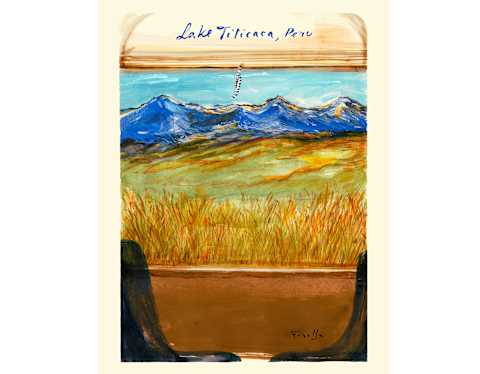
3 / 6
River Spey
Visited by the Royal Scotsman
Winding like a ribbon of silver through pine forests and fertile strath, the River Spey has flowed beside Scotland’s communities since ancient times. Deeply entwined with traditions of salmon fishing and whisky distilling, the river remains a living artery of Highland life. Today, watch for ospreys plunging for salmon and otters gliding through the shallows at dusk. Highland folklore adds a touch of enchantment, telling of shape-shifting water spirits known as kelpies, or ‘each-uisge’, said to appear as white-maned horses rising from the river’s depths.
VISIT THE RIVER SPEY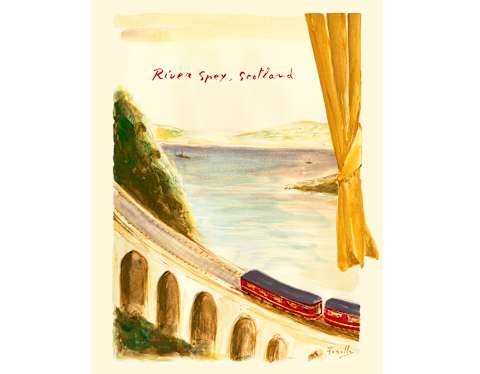
4 / 6
Piscina Naturais do Porto Moniz
1 hour drive from Reid’s Palace
On a corner of Madeira’s north coast lies a coastline shaped by fire and softened by the sea. The natural saltwater pools of Porto Moniz are ringed with volcanic rocks that allow ocean waves to spill in, forming crystal clear basins. Here, swimmers can drift between warm sunlit shallows and refreshing surges from the Atlantic, creating a haven where nature has carved out its own spa and every dip feels like discovery.
VISIT PORTO MONIZ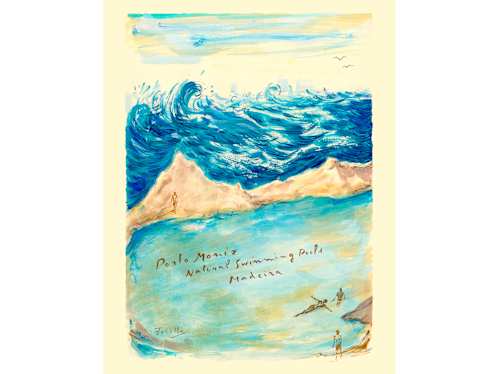
5 / 6
Cenotes of the Yucatán Peninsula
Several within a 30 min drive from Maroma
In this forested pocket of Mexico, the ground opens to reveal secret worlds. The cenotes that are unique to the Yucatán Peninsula once provided the ancient Maya with vital water and, at times, served as places of sacred offerings. More than 6,000 of these limestone sinkholes are scattered throughout the peninsula, where sunlight filters through jungle canopies to illuminate clear, sapphire-blue pools below. Taking a swim here feels like entering the earth’s own secret chambers, suspended between nature and ancient history.
VISIT MEXICO'S CENOTES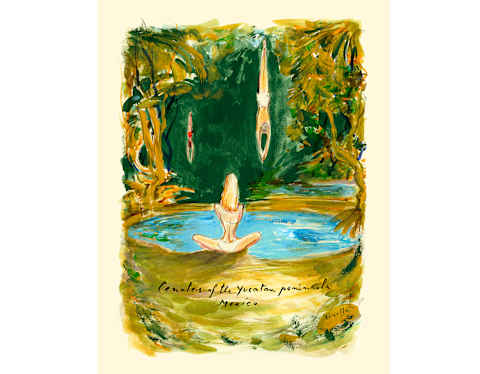
6 / 6
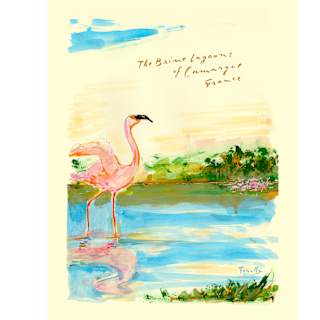
The Brine Lagoons of Camargue
Visited by Pivoine, a Belmond boat
The Camargue is a vast plain of shimmering brine lagoons on France’s south coast, separated from the sea by slender sandbars. Wildlife flourishes in these salt-kissed waters; flamingos gather in rosy flocks while white Camargue horses roam freely across marshland. Life here is lived in close rhythm with the tides and seasons; traditional cattle ranches, saltworks and fishing huts coexist with protected nature reserves, preserving a landscape that feels wild yet peaceful.
VISIT PIVOINE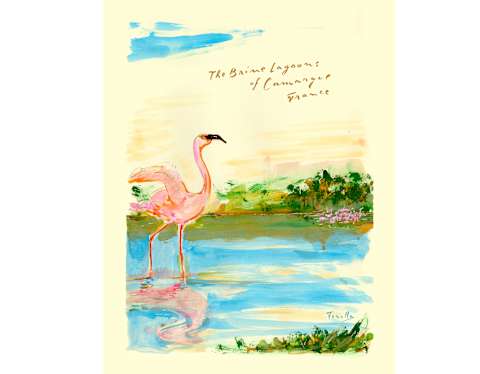
INTERVIEW WITH THE ARTIST
Can you talk us through your creative process, from initial reference to the finished artwork?
My creative process draws on my experience as a creative director in communication; concentration, focus on the maximum expressiveness the image must achieve, and then an obsessive pursuit of the beauty of the mark, the harmony of colors, and the overall composition of elements. Finally, I dive in. My hand moves faster than my mind; I very rarely draw preparatory sketches so as not to lose the effectiveness of an instinctive brushstroke. I believe my most beautiful works were created in a few furious minutes, almost holding my breath, on those days when you feel your hand working almost without you.
Some of these locations are vast and dramatic, others intimate and hidden. How do you decide on scale, perspective and detail when translating such different natural wonders onto paper?
This is the power of painting: holding together the real and the imaginary, the visible and the invisible. The point of view you choose determines the relationship between perspective and detail. For me, that relationship does not need to be true; it needs to be “right.” In narrative, expressive and aesthetic terms, Van Gogh’s room is right in his very famous painting Bedroom in Arles, in a way it could never be in any photograph.
What draws you to watercolour as a medium?
In fact, I use very diluted gouache and whatever I can find within reach on my chaotic desk. I have a limited palette of just a few muted, dusty colors because I don’t like piercing, strident tones. I feel like a “disegnatore” – an illustrator in transition toward painting. I think this is noticeable when observing my work and personal research, where intention merges with technique. Painting with the very tip of the brush is difficult and requires constant practice, but it offers incomparable pleasure.
How does travel inspire you?
I travel a lot for work and for pleasure, with a Moleskine in my pocket and my eyes wide open. I draw constantly, everywhere. When I travel, I let myself be inspired by the atmosphere of the places I visit, by the character of the locations and the people and by the unique sensations that only that place can give you. Everything you see and discover while traveling helps shape the way you feel – and if you are an artist, it also shapes your style.
You might also enjoy

Eat Your Way Through Madeira
Discover ‘Madeira: Recipes & Wanderings on the Atlantic Island of Eternal Spring,’ the fifth cookbook in the collaborative series between Belmond and Apartamento.
The Cadogan Playlist
Based between London and Ibiza, the Danish DJ and music curator Fiona Jane effortlessly bridges these two different destinations in her work. Particularly her music, which is an ode to the spirit that inhabits these two places, both unique sanctuaries for creatives.
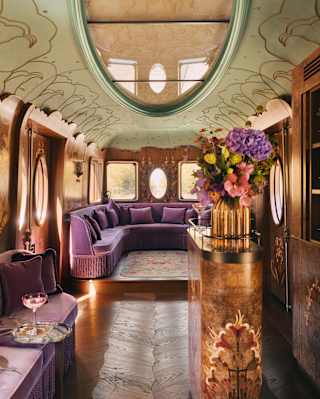
Celia, the British Pullman Carriage by Baz Luhrmann & Catherine Martin
Drawing inspiration from a broad sweep of theatrical history – from Shakespeare to Laurence Olivier – director Baz Luhrmann and cinematic designer Catherine Martin have created a dazzling new private dining carriage for the British Pullman. Explore the story, process and craft behind the carriage Celia, now on the rails and available to book.
The Maroma Playlist
André VII’s deep house-meet-dark-electro might, at first, sound like a world dominated solely by underground sounds. But dig a little and you’ll find that the DJ’s inspirations are plural, from radiant pop music to relaxing tunes – something evidenced in his Maroma playlist.
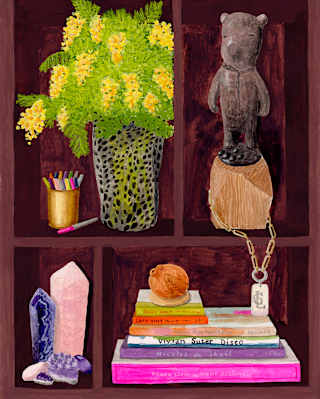
Objects of Inspiration: Laura Gonzalez
What inspires the creative minds of those who craft the world of Belmond? We sat down with Paris-based architect and interior designer Laura Gonzalez – the creative force behind Belmond’s new Villa Timeo – to hear about what items from her daily life say about her work.
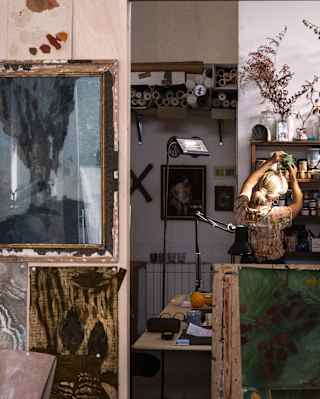
The Artisans Reimagining Florence’s Finest Hotel
Italy’s ultimate retreat and Renaissance haven, Villa San Michele occupies a privileged perch on the hills overlooking Florence. Set within the original monastery and gardens, every space is designed to deepen the connection to Florence’s breathtaking landscape and rich culture. Discover the artisans reviving this Renaissance legend, now open after a complete renovation.
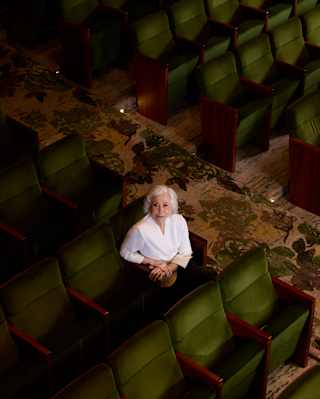
Fernanda Montenegro: A Star That Never Sets
As Copacabana Palace hotel renames its historic theater in honour of Fernanda Montenegro, Rafa Sales Ross looks back at the Grand Dame’s storied career to date.